
2F-DCK vs Ketamine
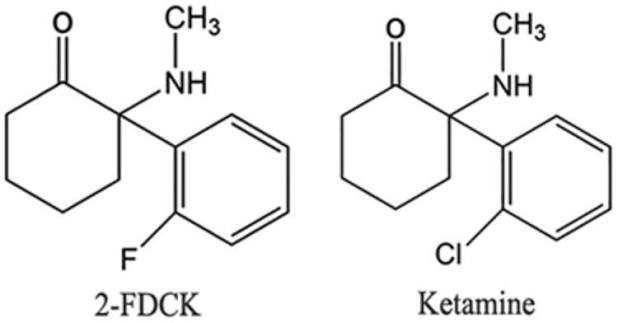
2F-DCK (2-fluorodeschloroketamine)
Dissociatives
VS
C₁₃H₁₆ClNO
Ketamine
Dissociatives
2F-DCK (2-fluorodeschloroketamine) is ketamine's most successful research-chemical clone — one fluorine atom swapped onto the ring, duration stretched from an hour to two or three. It was sold as 'legal ketamine' until the 2021 Chinese ban, and it's still circulating.
2F-DCK vs Ketamine — side by side
| 2F-DCK | Ketamine | |
|---|---|---|
| What it is | Fluorinated ketamine analog; gray-market RC since ~2015 | The original dissociative anesthetic, medicine since 1970 |
| Duration | 1–3 h | 45–90 min |
| Potency | Comparable to slightly stronger per mg | Baseline |
| The 'feel' | Very ketamine-like — floaty, warm, dissociating | The reference experience |
| Safety data | None in humans — no trials, no history | 50+ years of anesthesia data |
| Purity reality | Varying synthesis quality; byproducts documented | Pharmaceutical when medical; street K is often adulterated too |
| Legality | Controlled in China (2021), US analog-act risk, EU member bans | Schedule III (US); approved medicine |
The verdict
2F-DCK is ketamine with the safety research removed and the duration doubled. Users report it as nearly indistinguishable — which is exactly why it became popular and exactly why it's a gamble: a novel fluorinated arylcyclohexylamine with zero human toxicology. The classic RC trade applies: known drug with known risks versus unknown drug with unknown risks. Ketamine's bladder toxicity took decades to map; 2F-DCK's surprises haven't had time to arrive yet.
?Frequently asked questions
Is 2F-DCK the same as ketamine?
One atom different — close enough that users often can't tell blind. But 'one atom different' is also how thalidomide and countless failed drugs were born; similarity of effect isn't a safety certificate.
Is 2F-DCK legal?
It depends on the country. China banned it in 2021 (cutting off most supply), the US can prosecute under the analogue act, and several EU states schedule it explicitly. Assume it isn't 'legal' anywhere it's sold as a drug.